

Every payment company talks about “merchant acquisition.”
Almost none talk about the part that actually decides conversion - onboarding.
Let’s break this down without overthinking it.
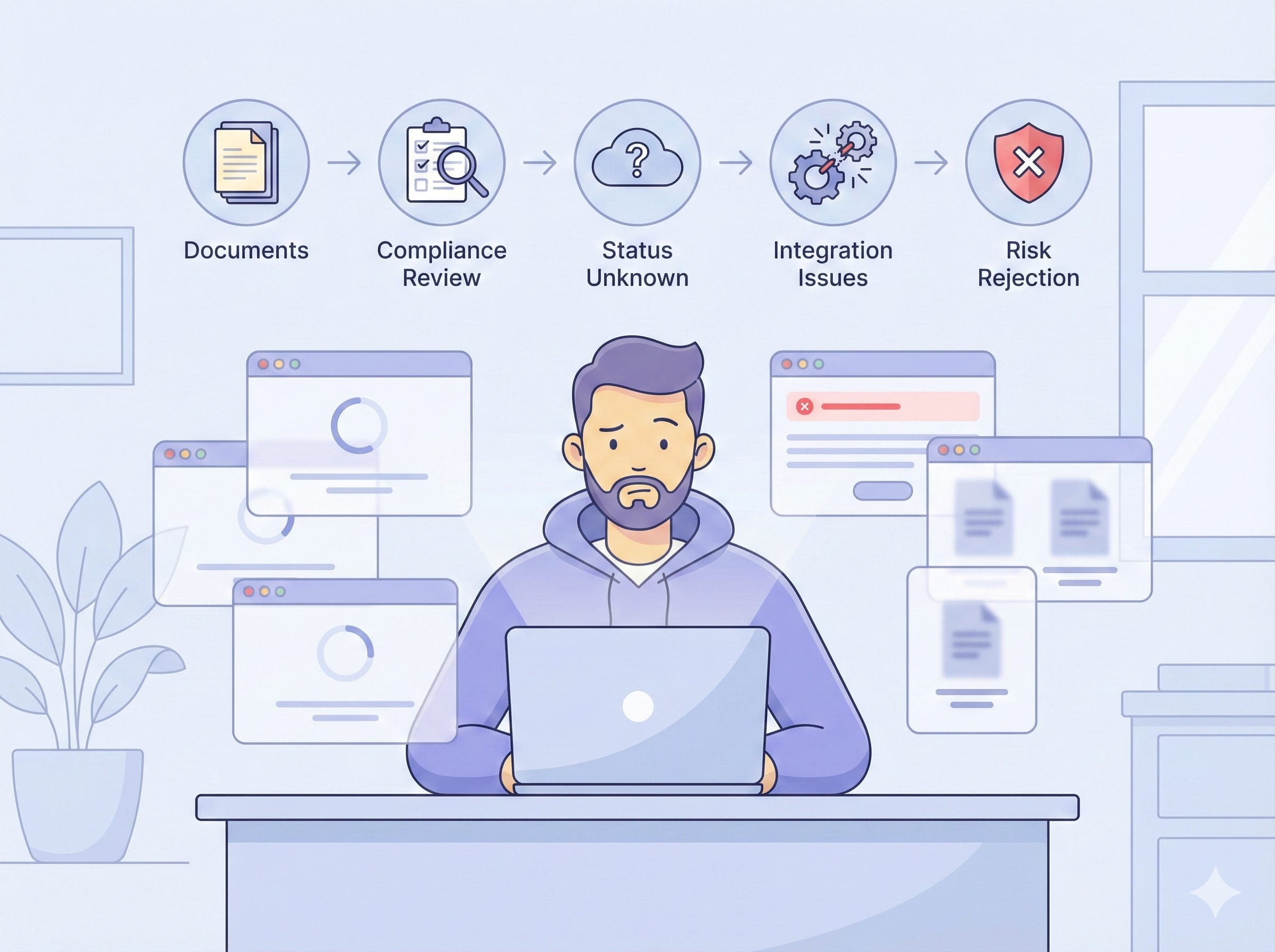
1. The first drop-off: Documents
Most small merchants already don’t know the difference between TRN, MoA, license activities, or why a simple online business needs so many papers.
If they can’t understand why something is needed, they don’t submit it.
2. The long wait: Compliance back-and-forth
This is where most deals die.
Merchants get an email:
“Your document is blurry. Please re-upload.”
“We need additional info.”
“We are reviewing.”
No timelines | No clarity.
And after 2–3 loops, the intent is gone.
3. “What’s the status?”
Every PSP has this problem - the merchant submits everything but still has no idea: who’s reviewing | how long it’ll take | what’s pending |what’s approved
When the process is opaque, the merchant mentally checks out.
4. Integration friction
Even after approval, a lot of merchants drop off here.
Why? unclear API docs | missing examples | SDKs that don’t match real use cases | support that replies after 24 hours
It’s not that merchants don’t want to accept payments - they just don’t want to feel lost.
5. Risk rules that reject without explaining
If you block a category, say it.
If the merchant doesn’t qualify, explain it.
Silence = frustration.
Frustration = churn.
The reality
Most PSPs don’t lose merchants to competition.
They lose them to confusion, slow loops, and zero visibility.
Fix onboarding, and you’ll see growth jump without touching pricing, marketing, or sales.
🛍️ And for merchants in the UAE
If you’re facing:
- slow approvals
- unclear requirements
- inconsistent support
- or issues going live with your payment provider
There’s a simpler option.
➡️ Switch to Comera Pay
Fast onboarding, clean flow, predictable timelines.
Because accepting payments shouldn’t feel like opening a bank account in 1998.
And if you still face any issues, you know who to reach out to!